
Lowering tire pressure—commonly called “airing down”—is one of the most important techniques in off-road driving. Whether you’re driving on sand, rocks, or muddy trails, reducing tire pressure can significantly improve traction, comfort, and vehicle control.
Many experienced off-roaders automatically air down their tires before entering a trail. But why does this simple adjustment make such a big difference? Let’s break it down.
1. Increased Tire Contact with the Ground
When you reduce tire pressure, the tire becomes softer and spreads out more against the ground. This increases the tire’s contact patch, which is the area of rubber touching the surface.
A larger contact patch means:
- More grip on loose terrain
- Better traction on sand, mud, or gravel
- Improved stability on uneven surfaces
Instead of digging into soft ground, the tire can “float” on top of it.
This is especially important in sand driving, where high tire pressure can cause the vehicle to sink quickly.
2. Better Traction on Difficult Terrain
Off-road trails often include rocks, loose dirt, and uneven surfaces. With lower tire pressure, tires become more flexible and can conform to the terrain.
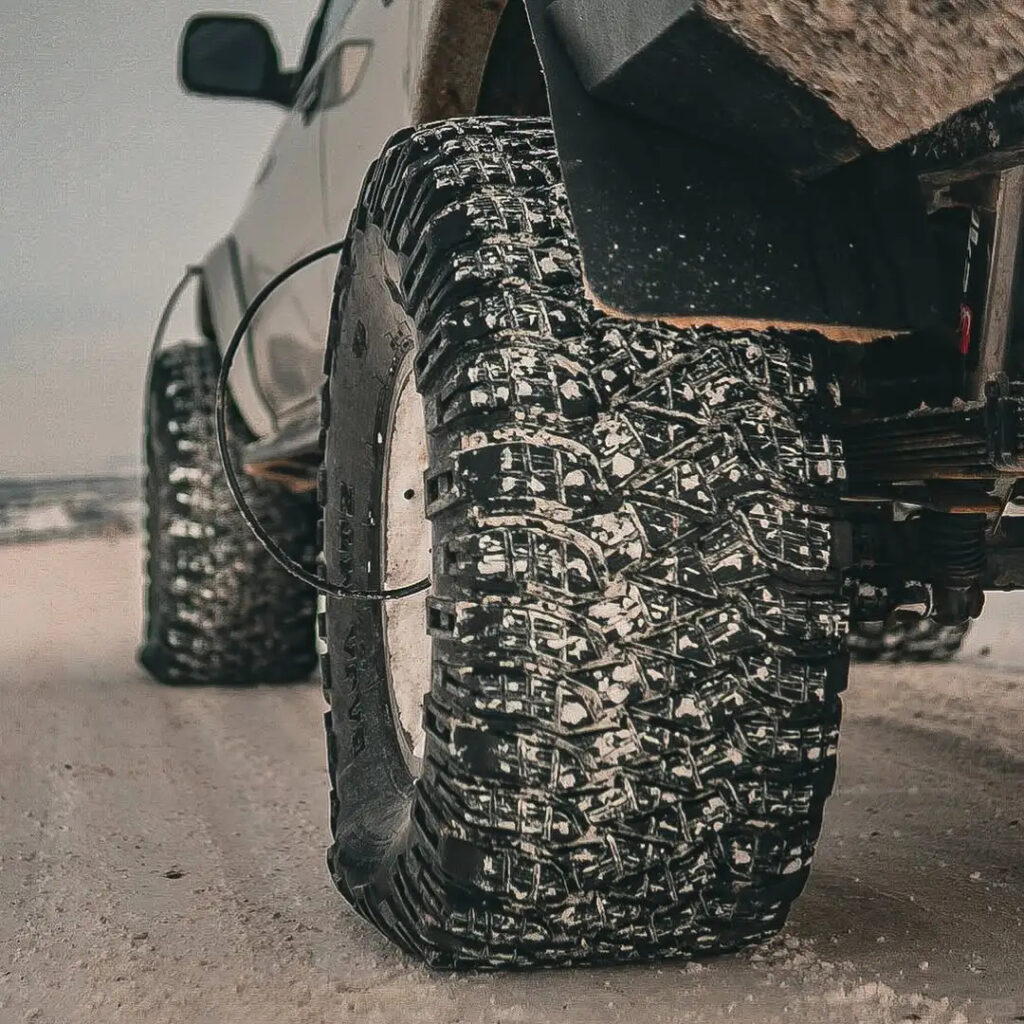
For example:
- On rocks, the tire wraps slightly around the surface, creating more grip.
- On gravel or dirt, the tire molds to the uneven ground instead of bouncing off it.
This flexibility improves traction and helps prevent wheel spin.
Better traction means you can maintain control and climb obstacles more easily.
3. A Smoother and More Comfortable Ride
Off-road trails can be rough, with bumps, ruts, and rocks. Lower tire pressure allows the tire to act as an additional shock absorber.
This provides several benefits:
- Reduced vibration inside the vehicle
- Less impact on suspension components
- More comfortable driving over rough terrain
Instead of transmitting every bump directly to the vehicle, the tire absorbs part of the shock.
4. Reduced Risk of Tire Damage
It might seem counterintuitive, but airing down can actually help protect your tires in many off-road situations.
With higher pressure, a tire is stiffer and more likely to suffer damage when hitting sharp rocks or obstacles.
With lower pressure:
- The tire can flex instead of cracking or puncturing
- Impacts are distributed across a larger surface area
This flexibility helps prevent certain types of tire damage during off-road driving.
5. Improved Vehicle Control
Lower tire pressure also improves overall vehicle control.
When tires maintain better traction with the ground, drivers can experience:
- More predictable steering
- Better braking performance
- Improved stability on loose surfaces
This makes navigating technical trails much safer and easier.
Typical Off-Road Tire Pressure
The ideal tire pressure depends on the terrain and the vehicle setup. Many off-roaders use pressures significantly lower than normal road pressure.
Typical ranges include:
| Terrain | Recommended Tire Pressure |
|---|---|
| Sand | 12–18 PSI |
| Rocks | 15–20 PSI |
| Mud | 18–22 PSI |
| Dirt Trails | 18–25 PSI |
Drivers should always adjust pressure carefully and reinflate tires before returning to highway driving.
THE Problem: airiing down takes time
Airing down can be done manually by pressing the valve core, but most off-road drivers prefer using a tire deflator tool.
Lowering tire pressure manually is slow and inconvenient.
- You need to check PSI repeatedly
- You waste time on each tire
- It’s frustrating—especially on trails
And when you’re off-roading, time and convenience matter.
The Smart Solution: Tire Deflators
This is exactly why experienced off-roaders use tire deflators.
Instead of manually pressing valves, a deflator lets you:
Driving at highway speeds with low tire pressure can cause:
- • Automatically release air to a preset PSI
- • Deflate all 4 tires quickly
- • Save time and effort
Recommended Upgrade: Fast Tire Deflators
If you want to make off-roading easier, this is one of the best upgrades you can make.
👉 Check out our solutions:
Why Our Deflators?
• Fast and consistent pressure release
• Accurate PSI control
• No tools required
• Perfect for off-road vehicles, trucks, and overlanders
Get trail-ready in seconds — drop your tire pressure from 2.5 bar to 0.7 bar in just 15 seconds.
Don’t Forget to Air Back Up
Lower pressure is great off-road—but not for highways.
Driving at low PSI on pavement can:
• Overheat tires
• Reduce load capacity
• Increase failure risk 
Always reinflate your tires before returning to the road.
Final Thoughts
Lowering tire pressure is one of the simplest yet most effective techniques in off-road driving. By increasing traction, improving comfort, and enhancing control, airing down allows drivers to tackle challenging terrain with greater confidence.
For anyone planning to explore off-road trails, learning when and how to air down tires is an essential skill that can make every adventure safer and more enjoyable.